Funerals & Memorial Services
The Church accompanies the dying and the departed with its prayers: the last rites, the funeral service, and the memorial services that follow in the months and years afterwards.
Special Service
The Funeral and the Memorial
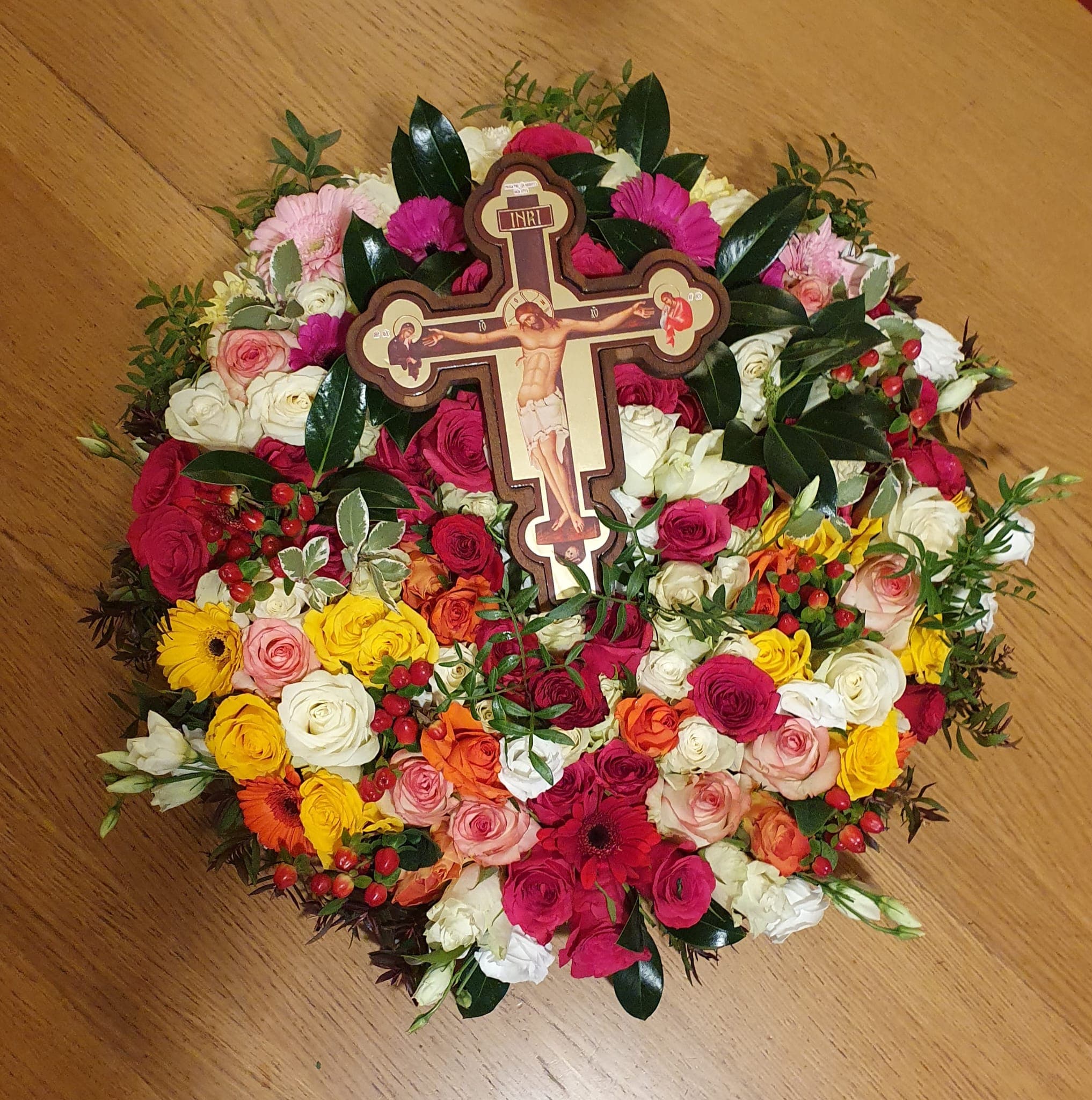
Arranging a memorial
A memorial service is arranged simply, in conversation with the priest, who will agree the Sunday and the time with you. It helps to bring:
- The names of the departed, for the priest to commemorate
- Koliva, if you wish to follow the tradition of blessing it
Last rites
Wherever possible, an Orthodox Christian should receive the sacraments of Confession and Holy Communion before death. Please do not delay in contacting the priest when a death is expected; get in touch as soon as you become aware of the situation.
Burial or cremation
The Orthodox Church has a funeral service, said preferably in a church, over a body that is to be buried. Cremation is not an Orthodox practice, and there is no service for it. We ask families to bear this in mind when planning a funeral, and to let the funeral director know.
Memorial services
Memorial services are held on the fortieth day after death, at six months and at one year, and on the Memorial Saturdays, the Saturdays of Souls, that fall through the liturgical year. A memorial service can be arranged with the priest and is usually said after the Divine Liturgy on a Sunday. If you give the priest a list of names, they are remembered at every Divine Liturgy, when the bread and wine are prepared for the Eucharist. Traditionally, koliva, a dish of boiled wheat and seeds, is blessed and shared in memory of the departed.
Every family’s circumstances are different, and none of this need be settled before you get in touch. Dates and preparation are arranged personally with the Rector, who will guide you through everything. Contact the Rector →